 The Schelling Point is a play with a great deal going for it, but unfortunately falls somewhat short as a really effective piece of theatre.
The premise is fascinating: depicting the tense political calculations made inside President Kennedy’s inner circle during the successive Berlin and Cuban Missile Crises, juxtaposed with Stanley Kubrick’s interpersonal maneuvering behind the scenes of making his great satirical film Dr. Strangelove. Indirectly linked by the involvement in both endeavours of the academic nuclear strategist Thomas Schelling, these two very different scenarios of satirical and all-too-real nuclear brinkmanship at the potential flashpoint of the Cold War create a wealth of intriguing resonances between them.
While the play deliberately obfuscates the historical timeline in order to give the impression of greater simultaneity between the two stories, this matters little, as their respective plots do not directly overlap. Similarly, there is undoubtedly much dramatic license in the depiction of these characters’ encounters, but this is what makes the play work, these speculative interactions between such fascinating historical personalities, both in politics and entertainment. These characters were all major figures of their day whose reputations endure, and our reception of the drama is enhanced by the greater posthumous knowledge we now have of their lives.
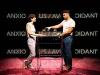
In the filmmaking storyline we see Kubrick the legendary control freak using all the charm, psychology and other tricks at his disposal to manipulate the reluctant George C. Scott and the unstable Peter Sellers into starring in his dubious-sounding movie satirising the uncomfortably topical path to nuclear Armageddon. While Scott frets about the film’s credibility being harmful to his career and Sellers is going through a divorce that has him teetering on the verge of a psychotic break, Kubrick struggles with quiet confidence to keep them both in check while seeking to work out exactly what tone his radical new film will have.
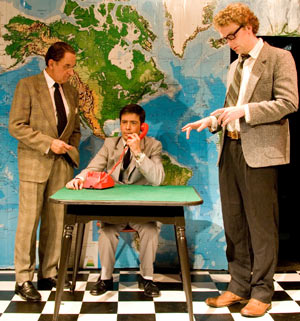
Absurdly, the situation in the “real” sphere of political crisis for JFK seems almost straightforward in comparison, and yet with the stakes being literally avoiding the end of the world, this scenario seems at times equally absurd. Most of these scenes involve Schelling attempting to convince the President of the efficacy of applying the logical principles of “game theory” to his decision-making process in dealing with the Soviets, boiling the choices down to a very scary game of chicken. Although supported by Secretary of Defense Robert McNamara, Schelling has a hard time winning Kennedy over with his academic reasoning, as the President is distracted by his own conflicting feelings of responsibility, inexperience, hubris and fear.
If one viewed at this play simply as paralleling a “behind the scenes” look at the personalities involved in one of the most crucial moments of 20th Century geopolitics with those making a legendary contemporaneous film on essentially the same topic, this in and of itself would be a more than adequately interesting basis for a piece of theatre. However, it is in seeking to imbue the play with a more intimate human relevance that playwright Ron Elisha comes a little unstuck.
A significant portion of the drama in the Dr. Strangelove half of the play is spent with Kubrick, Sellers and Scott discussing the miseries of their respective failed marriages and affairs, and the impossibility of reaching an accord with the opposite sex. The main problem with this is that these women are not actually represented on stage, nor do they directly effect the plot, other than in Sellers’ case being the (current) precipitating cause of his emotional instability. The absence of these women from the story and the lack of close interrelation between scenes that address these relationships versus those purely dealing with the filmmaking leaves what seems designed to be an emotionally crucial element of the play feeling poorly integrated.
To give the playwright due credit, however, the absence of the wives and lovers does appear to have been quite an intentional, even thematically-driven choice. This is clearly suggested by the play’s tagline, “a mixed-motive game of love and nuclear war”. As the play’s title alludes, Elisha seems to be using Schelling’s game theory to draw a parallel between the these three entertainers’ strained relationships and the game of nuclear chicken being played between JFK and Soviet Premier Khrushchev. In the absence of a direct line of communication, motives and strategies have to be calculated or outright guessed at, with potentially devastating outcomes. In much the same way, Sellers, Kubrick, and Scott are separated from their adversarial former spouses, stumbling and guessing at their true feelings while blinded by their own fear and self-importance. These men are unable or unwilling to communicate directly, with mutually assured emotional destruction as the potential fallout.
This is potentially a great dramatic conceit, but the problem is that, unfortunately, it just doesn’t work. While the scenes with Schelling, McNamara and Kennedy are tight, engrossing and to the point, the counterbalancing Strangelove sequences seem off-kilter. Most of these scenes work on their own terms, but seem awkwardly strung together, as though the playwright couldn’t decide whether he was writing about the struggle of making of Kubrick’s film or the private lives of three men who just happened to be working together. Elisha fails to satisfactorily dramatise both, having afforded himself only half a play in which to do so. As clever as the thematic correlation of the off-stage wives with the off-stage Khrushchev may be, dramatically it simply falls flat, especially in an interminable scene at the end of Act I where the three men drunkenly discuss their failed relationships with an outpouring of self-centered sexist dysfunction over these women with whom we as an audience never get to connect. This isn’t helped by the reflections of Schelling, McNamara and Kennedy on their wives towards the end of the play, which feel rather tacked-on and incongruous.
One other failing of the show is the musical numbers. Although perhaps not as incongruous as it might sound, these little interludes and scene-bridges weren’t an intrinsically bad idea, utilising cabaret singer Miss Lauren La Rouge on the Old Fitz stage’s upper level, physically separated from the action and functioning as the closest thing we get to a representation of the various women discussed in the play. Using thematically appropriate period songs with the six male actors down below acting as a Rat-Pack-esque chorus, this device breaks up and generally lightens the main action of the two plotlines in a manner that is not so much unwelcome, but merely poorly executed. To put not too fine a point on it, while La Rouge may be an effective entertainer in her own context, in this play neither her showmanship nor her vocal performance were up to scratch, coming off as an awkward and amateurish contrast to this fine cast of actors who couldn’t help but upstage her even with their own back-up singing.
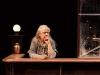
As to the actors, this production features an excellent ensemble without a weak link among them. Andrew Henry and the veteran Jonathan Elsom both provide gentle comic relief as Schelling and McNamara, likely the two characters of whom the audience would have the least preconception, while Daniel Cordeaux brings great credibility to the irascible role of Scott. David Callan walks the tightrope between tragic and hilarious in his excellent portrayal of Sellers as both the immensely screwed-up actor and through uproariously dead-on recreations of his memorable performances in Dr. Strangelove, culminating in a hilariously uncomfortable scene in which Sellers has a frenzied personality meltdown, all whilst still in-character as the film’s infamous title role.
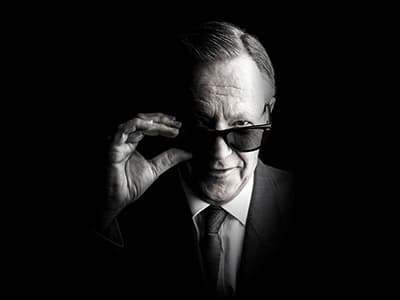
Jamie McGregor does a very impressive job as John F. Kennedy, producing a highly convincing performance through his judiciously underplayed but evocative mimicry of the famous President’s voice, accent and mannerisms, all whilst conveying a conflicting array of barely-suppressed emotions gripping a leader with the fate of the world quite literally on his shoulders. Leading the opposing plotline is the phenomenal Marshall Napier as Stanley Kubrick, once again proving his versatility in creating this striking portrait of Kubrick as an urbane, self-assured genius whose blatant machinations always manage to get what he wants from people, whilst remaining somehow attractive in spite of his ruthlessness.
With a terrific cast and the highly engaging dual subject matter of these seminal moments in the popular consciousness of early ‘60s nuclear brinkmanship, The Schelling Point is by no means a poor play. It is a good, intelligent and deeply interesting play, but one that as both a script and a production contains a couple of major flaws that unfortunately prevent it from being the truly strong piece of theatre that it is so tantalisingly close to becoming.
Chester Productions presents
THE SCHELLING POINT
by Ron Elisha
Directed by Sarah Goodes
Venue: The TRS Old Fitzroy Theatre | Cnr Cathedral and Dowling Streets, Woolloomooloo
Dates: Wednesday 18 August - Saturday 11 September 2010
Times: Tuesday to Saturday 8pm; Sunday 5pm
Bookings: www.rocksurfers.org or 1300 GET TIX